
Introduction
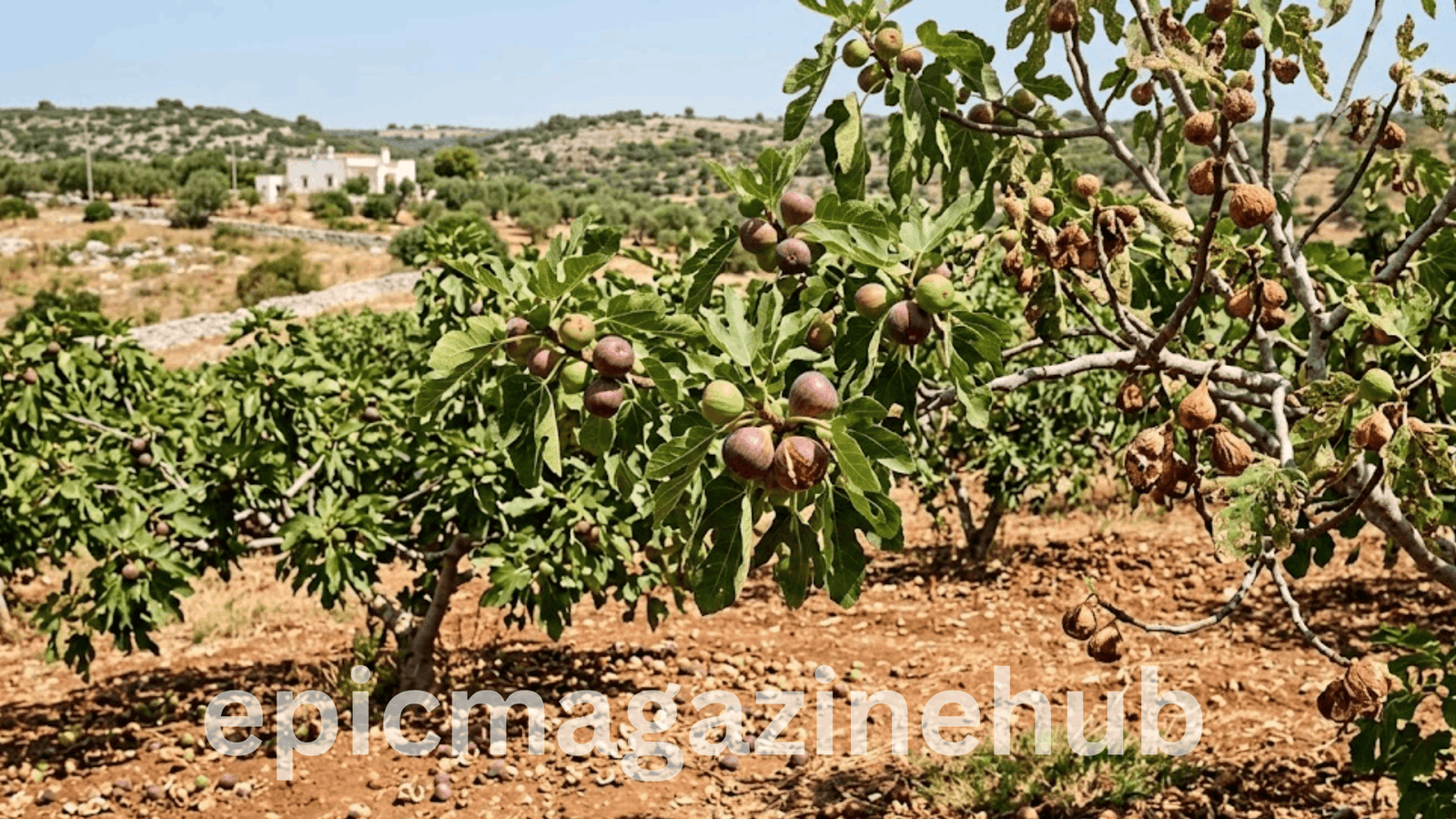
Italy has long been celebrated for its rich agricultural heritage, with figs among the country’s most cherished crops. Italian figs, known for their unique flavor and nutritional value, are grown across regions such as Calabria, Sicily, and Apulia. They are grown for fresh eating as well as for drying and use in jams, pastries, and beverages.
In recent years, Italian fig farmers have faced significant challenges due to the loss of the Italian fig crop. Reduced yields not only threaten the livelihoods of smallholder farmers but also disrupt local markets, exports, and Italy’s cultural identity. Understanding the causes of these losses, their economic and environmental impacts, and strategies for mitigation is crucial to preserving Italy’s fig heritage and supporting sustainable agriculture.
Historical Importance of Fig Farming in Italy
Figs have been part of Italian agriculture for thousands of years. Archaeological evidence shows that fig trees were cultivated during the Roman Empire. The Mediterranean climate, with warm summers and mild winters, provides ideal conditions for fig orchards.
Today, Italy remains one of the leading fig producers in the Mediterranean, producing varieties such as Dottato, Rossa di San Giovanni, Brogiotto Nero, Tonda Gentile, Fico Mandorlato, and Fico Bianco. Beyond economics, figs are intertwined with local culture, culinary traditions, and regional identity. The decline in fig production threatens not only food supply but also centuries-old farming traditions.
Understanding Italian Fig Crop Loss
Italian fig crop loss refers to the reduction in fig production caused by a combination of climatic, biological, and economic factors. It does not always mean total crop failure. In many cases, it manifests as:
- Early fruit drop before ripening
- Split or sunburned fruit
- Reduced fruit size or sweetness
- Uneven harvest timing
- Fungal rot or weakened branches
Italian fig cultivation has two main harvest windows:
- Breba (Fioroni) – Early crop grown on last year’s wood
- Main Crop – Later summer harvest grown on new shoots
Crop loss does not always impact both harvest periods equally. For instance, a late spring frost might harm the breba crop while leaving the main harvest largely intact, whereas extended summer droughts tend to reduce the main crop significantly.
Major Fig-Producing Regions in Italy
The majority of fig production is concentrated in southern Italy, where climate and soil conditions favor fig orchards:
| Region | Major Varieties | Annual Production (tons) | % of National Output |
| Calabria | Dottato, Rossa di San Giovanni | 12,000 | 30% |
| Sicily | Brogiotto Nero, Tonda Gentile | 10,500 | 26% |
| Apulia | Fico Mandorlato, Fico Bianco | 8,000 | 20% |
| Campania | Fico Nero del Cilento | 5,500 | 14% |
| Others | Various regional varieties | 3,500 | 10% |
Southern Italy is most exposed to climate extremes, water scarcity, and pest outbreaks, making it highly vulnerable to loss of the talig crop. Coastal orchards benefit from sea breezes but may face salt stress. At the same time, inland hills offer better drainage but can suffer severe drought.
Primary Causes of Italian Fig Crop Loss
1. Climate Change and Weather Extremes
Figs are highly sensitive to weather. Unpredictable climate patterns have caused:
- Droughts – Reduce fruit size, sugar content, and yields
- Late spring frost – Damages blossoms, reducing fruit set
- Heat waves – Cause sunburned or “cooked” fruit, compress harvest windows
- Excess rainfall causes fungal infections like Fig Rust and Anthracnose
Recent rainfall production highlights this sensitivity:
| Year | Annual Rainfall (mm) | Production (tons) |
| 2018 | 800 | 37,000 |
| 2019 | 920 | 34,500 |
| 2020 | 750 | 31,000 |
| 2021 | 880 | 30,000 |
| 2022 | 700 | 28,500 |
| 2023 | 950 | 27,000 |
| 2024 | 720 | 25,500 |
| 2025 | 800 | 24,000 |
2. Pest Infestations
Insects such as fig moths, fruit flies, and black weevils (Aclees sp. cf. foveatus) attack figs, damaging fruit and reducing yields. Pests also create entry points for fungal infections, further compounding losses.
Early warning signs include trunk holes, sawdust-like frass, sudden wilting of branches, and unexplained fruit drop.
3. Fungal and Bacterial Diseases
Humid conditions and dense orchards promote fungal infections, including:
- Fig Rust – Spots on leaves, reducing photosynthesis
- Anthracnose – Causes fruit rot.
. - Botrytis cinerea – Gray mold affecting ripe fruit
Bacterial infections, though rarer, can cause branch dieback. Using certified planting stock and clean pruning practices is crucial to prevent the spread of disease.
4. Soil Degradation and Water Scarcity
Continuous monoculture, nutrient depletion, and poor irrigation practices reduce soil fertility.
Effects include:
- Smaller fruits and reduced tree vigor
- Increased susceptibility to root rot
- Lower resilience during drought
Drought is especially critical in Sicily and Sardinia, where even irrigated orchards face water shortages.
5. Labor Shortages and Economic Pressures
Harvesting figs requires manual labor. Rising labor costs and rural depopulation reduce the availability of skilled workers, leading to delayed harvests and increased fruit wastage. Small family farms are most affected.
Economic Impact of Italian Fig Crop Loss
| Economic Factor | Impact |
| Annual Revenue | Reduced by 15–20% |
| Export Market | Lower supply affects European and global demand |
| Employment | Seasonal labor demand fluctuates |
| Related Industries | Processing, packaging, and transport affected |
Annual losses due to crop failure are estimated at €20–25 million, with indirect losses (processing, distribution) adding €10–15 million. Lower supply also drives up consumer prices, affecting affordability and market stability.
Environmental Consequences
Italian fig crop loss is not only an economic issue:
- Increased pesticide use – Affects soil and water quality
- Loss of biodiversity – Intensive orchards reduce native flora and fauna
- Carbon footprint – Reduced local productProductionto imports, increasing transport emissions
Case Study: Calabria Fig Orchards
Calabria, a leading fig-producing region, illustrates the impact of crop loss:
| Year | Area Harvested (ha) | Production (tons) | Loss (%) |
| 2019 | 1,200 | 12,000 | 20% |
| 2020 | 1,180 | 11,000 | 22% |
| 2021 | 1,150 | 10,500 | 23% |
| 2022 | 1,160 | 10,200 | 24% |
| 2023 | 1,170 | 9,900 | 18% |
| 2024 | 1,180 | 10,400 | 12% |
Adopting drip irrigation and natural pest-control methods significantly reduced crop losses in 2024, demonstrating that targeted interventions can mitigate crop loss.
Mitigation Strategies
1. Improved Agricultural Practices
- Diversified planting to reduce disease vulnerability
- Drip irrigation to conserve water
- Organic soil amendments to improve fertility
2. Pest and Disease Management
- Integrated Pest Management (IPM) using natural predators
- Fungicide rotation to prevent resistance
- Regular monitoring and early detection
3. Climate Adaptation Techniques
- Shade nets or row covers during extreme weather
- Drought-resistant fig varieties
- Harvest scheduling based on weather forecasts
4. Technology Integration
- Soil moisture sensors and satellite monitoring
- AI-based predictive analytics for pest outbreaks
- Agrivoltaic systems for shade and energy generation
5. Government Support
- Financial aid programs for affected farmers
- Research on disease-resistant and climate-adapted varieties
- Cooperative farming models to share labor and resources
6. Home Garden & Small-Orchard Tips
- Mulch the soil to retain moisture.
- Paint the trunk with diluted white latex to prevent sunburn.
- Use temporary shade nets during peak heat.
- Thin excess fruit to improve quality
Future Outlook
Despite challenges, Italian fig production has strong potential for recovery. Opportunities include:
- Rising global demand for organic and premium figs
- Value-added products such as jams, dried figs, and specialty beverages
- Collaboration with platforms like Businesses Mag to expand market reach
Long-term resilience depends on sustainable practices, technology adoption, climate adaptation, and policy support.
Conclusion
A combination of climate variability, pests, diseases, soil degradation, and economic pressures drives losses in the Italian fig crop. Its impact spans local economies, export markets, employment, and the environment.
However, with innovative agricultural practices, integrated pest management, climate adaptation techniques, and supportive government policies, Italy’s fig industry can recover. Farmers, researchers, and policymakers must collaborate to preserve fig cultivation for future generations.
Italian figs are not just fruit—they are a cultural heritage. Protecting them ensures the legacy of Italy’s rich agricultural traditions while adapting to a changing climate.
FAQs
Q1: What causes Italian fig crop loss?
Climate change, pests, fungal diseases, soil degradation, drought, and labor shortages.
Q2: Which regions are most affected?
Southern regions like Apulia, Calabria, Sicily, and parts of Campania.
Q3: Can fig trees recover after a poor harvest?
Yes, with proper care, including irrigation, pruning, soil improvement, and pest management.
Q4: How does drought affect fig production?
Reduces fruit size and sugar content, causes early fruit drop, and weakens trees for future seasons.
Q5: What are the early warning signs of pest damage?
Trunk holes, sawdust-like frass, wilting branches, reduced leaf growth, and unexplained fruit drop.
You may also like to read About: Jernsenger.
Disclaimer:The information provided is for general educational and informational purposes only. It does not constitute professional agricultural, financial, or legal advice. Readers should consult qualified experts before making decisions regarding fig cultivation, crop management, or investments. The author and publisher are not responsible for any outcomes.
About the Author