
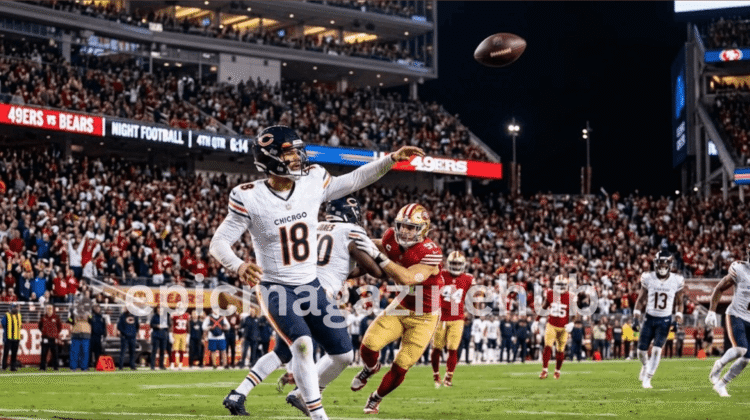
Complete Statistical Breakdown, Game Momentum Analysis & Key Player Impact
When fans search for player stats for the Chicago Bears vs. the 49ers match, they want more than just numbers. They want context, momentum, emotion, and clarity. They want to understand who dominated, who struggled, and why the scoreboard told the story it did. This complete match report delivers exactly that. You will see full player statistics, key moments, advanced insights, and a deep breakdown of how the game unfolded from kickoff to the final whistle.
The Chicago Bears entered this matchup with confidence and a strong offensive rhythm. Meanwhile, the San Francisco 49ers prepared to defend their home field with physical football and explosive playmaking. From the first snap, both teams attacked aggressively. As a result, fans witnessed one of the most thrilling contests of the season.
Game Overview and Final Score
The 49ers secured a narrow victory in a high-scoring battle.
| Team | Q1 | Q2 | Q3 | Q4 | Final |
| Chicago Bears | 14 | 7 | 7 | 10 | 38 |
| San Francisco 49ers | 14 | 14 | 7 | 7 | 42 |
Although Chicago kept pressure throughout the game, San Francisco controlled key possessions late in the fourth quarter. Therefore, the 49ers walked away with a 42–38 win.
Team Performance Summary
Before we dive into individual Chicago Bears vs. 49ers match player stats, let’s examine team totals.
| Category | Bears | 49ers |
| Total Yards | 440 | 496 |
| Passing Yards | 330 | 296 |
| Rushing Yards | 110 | 200 |
| First Downs | 26 | 32 |
| Turnovers | 0 | 1 |
| Time of Possession | 26:27 | 33:33 |
The Bears dominated through the air. However, the 49ers controlled the ground game and managed the clock better. Consequently, San Francisco dictated tempo during crucial stretches.
Quarterback Comparison: Leadership Under Pressure
Quarterbacks shaped the outcome of this clash.
Chicago Bears – Caleb Williams
| Comp | Att | Yards | TD | INT | Rating |
| 25 | 42 | 330 | 2 | 0 | 100.3 |
Caleb Williams attacked aggressively. He pushed the ball downfield with confidence. Moreover, he protected possession and avoided costly turnovers. His 330 passing yards proved his ability to stretch defenses.
San Francisco 49ers – Brock Purdy
| Comp | Att | Yards | TD | INT | Rating |
| 24 | 33 | 303 | 3 | 1 | 118.6 |
Brock Purdy delivered elite efficiency. He completed over 72% of his passes. In addition, he added two rushing touchdowns. Therefore, he accounted for five total touchdowns and became the decisive factor.
When comparing the Chicago Bears vs. the 49ers match player stats, Purdy’s total scoring output ultimately separated the teams.
Rushing Attack: Physical Football Wins Games
San Francisco relied heavily on its ground game.
Chicago Bears Rushing Stats
| Player | Carries | Yards | TD |
| D’Andre Swift | 9 | 54 | 2 |
| Caleb Williams | 5 | 18 | 0 |
| Others | 8 | 38 | 0 |
Swift found the end zone twice. However, Chicago struggled to establish consistent rushing drives.
San Francisco 49ers Rushing Stats
| Player | Carries | Yards | TD |
| Christian McCaffrey | 23 | 140 | 1 |
| Brock Purdy | 6 | 28 | 2 |
Christian McCaffrey imposed his will. He attacked gaps quickly and forced missed tackles. Because he gained 140 rushing yards, he opened passing lanes for Purdy.
The 49ers gained 200 total rushing yards. As a result, they controlled clock momentum and wore down the Bears’ defense.
Receiving Leaders: Big Plays Shift Momentum
Passing numbers tell part of the story. Receiving production completes it.
Chicago Bears Receiving Stats
| Player | Receptions | Yards | TD |
| Luther Burden III | 8 | 138 | 1 |
| Colston Loveland | 6 | 94 | 1 |
| Others | 11 | 98 | 0 |
Burden delivered explosive catches. Furthermore, Loveland provided a reliable presence in the red zone. Together, they fueled Chicago’s comeback attempts.
San Francisco 49ers Receiving Stats
| Player | Receptions | Yards | TD |
| Ricky Pearsall | 5 | 85 | 0 |
| Others | 19 | 218 | 3 |
San Francisco spread the ball effectively. Instead of relying on one star, they attacked through multiple options. Therefore, Chicago struggled to predict targets.
Defensive Impact Plays
Defense often changes emotional momentum.
| Player | Team | Key Play |
| T.J. Edwards | Bears | 34-yard interception return TD |
| Austin Booker | Bears | 1 Sack |
| 49ers Defense | 49ers | 1 Interception |
Early in the game, Edwards electrified the crowd with a defensive touchdown. Nevertheless, the 49ers answered quickly and regained control.
Game Flow and Turning Points
At first, both teams traded touchdowns. Then, San Francisco accelerated during the second quarter with back-to-back scoring drives. Meanwhile, Chicago fought back through aggressive passing.
During the third quarter, momentum shifted repeatedly. However, the 49ers executed longer drives and extended possession time. Consequently, Chicago’s defense remained on the field longer than expected.
In the fourth quarter, both teams attacked urgently. Still, Purdy’s rushing touchdown gave the 49ers breathing room. Although Williams responded with strong throws, time expired before Chicago could retake the lead.
Advanced Insights and Critical Thinking
When analyzing the Chicago Bears vs. the 49ers match player stats, several performance trends stand out:
- Efficiency matters more than volume. Purdy threw fewer passes but produced higher scoring efficiency.
- Rushing balance creates stability. The 49ers’ 200 rushing yards reduced defensive pressure.
- Time of possession influences fatigue. San Francisco controlled the ball for over 33 minutes.
- Turnover discipline shapes outcomes. Chicago avoided turnovers, but San Francisco capitalized on scoring opportunities more effectively.
Therefore, the stats reveal strategic contrast rather than random scoring.
Emotional Momentum and Crowd Influence
Levi’s Stadium buzzed with intensity throughout the night. Each Purdy touchdown energized the home crowd. Conversely, each Bear’s response silenced it for a moment. Fans experienced constant tension.
Because the score remained tight, every third-down conversion carried emotional weight. Moreover, every defensive stop shifted psychological control.
Star Performers of the Night
Brock Purdy – 5 total touchdowns
Christian McCaffrey – 140 rushing yards
Caleb Williams – 330 passing yards
Luther Burden III – 138 receiving yards
Each star elevated performance under pressure. However, Purdy’s dual-threat dominance ultimately determined victory.
Strategic Comparison
Chicago emphasized vertical passing. Meanwhile, San Francisco blended rushing and short precision throws. Although Chicago gained more passing yards, the 49ers maintained better balance.
Additionally, San Francisco converted key red-zone opportunities into touchdowns rather than field goals. That efficiency changed everything.
What This Game Means Moving Forward
The 49ers reinforced their offensive identity. They proved they can win shootouts, not just defensive battles. Meanwhile, the Bears demonstrated explosive potential but must strengthen rushing depth and defensive endurance.
If these teams meet again in the playoffs, expect another offensive spectacle. However, Chicago must adjust its run defense to change the outcome.
Final Thoughts
This matchup delivered excitement, star power, and dramatic swings. When fans search for player stats for the Chicago Bears vs. 49ers match, they seek clarity beyond raw numbers. This complete breakdown explains who dominated, why the 49ers won, and how individual performances shaped the final result.
The Bears showcased resilience and offensive creativity. Nevertheless, the 49ers controlled the tempo, executed efficiently, and capitalized on scoring chances.
Ultimately, San Francisco secured victory through balance, leadership, and relentless execution.
For more insights, you may also like to read about: Myreadignmnaga