Introduction
Remote work has become a popular career option for professionals around the world. As more companies build distributed teams, demand for skilled technology professionals continues to grow. However, competition for remote positions is also increasing, making the right skills more important than ever.
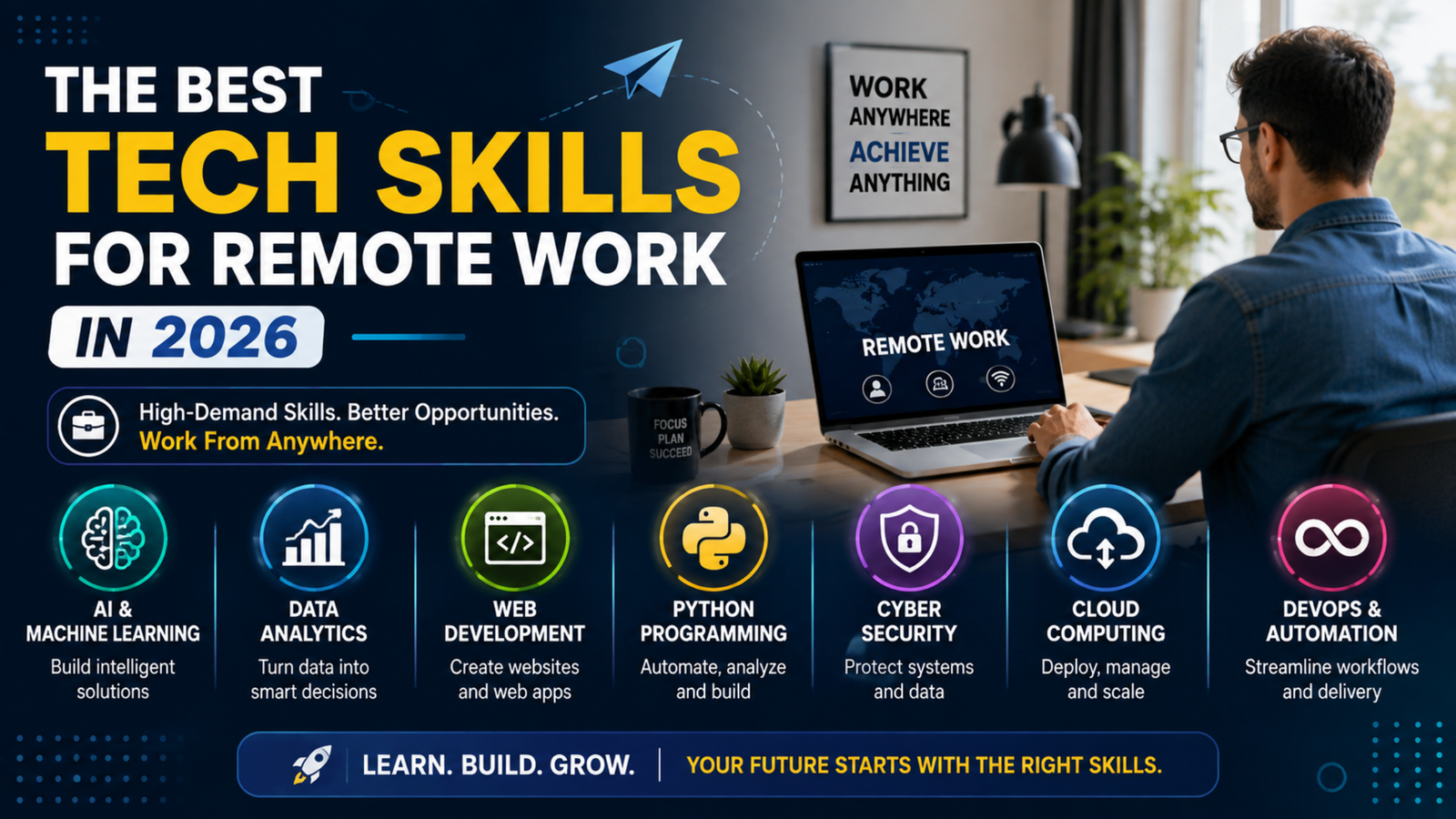
Learning the best tech skills for remote work in 2026 can help you qualify for better opportunities and build a flexible career. Skills such as artificial intelligence, data analytics, web development, cybersecurity, cloud computing, and automation can open doors to remote tech jobs. Whether you are a beginner or already have technical experience, choosing one in-demand skill and developing practical experience can help you move toward a successful remote career.
The Best Tech Skills for Remote Work
The demand for skilled technology professionals continues to increase as businesses adopt remote and hybrid work models. Learning the best tech skills for remote work can help you qualify for jobs, freelance projects, and long-term digital careers.
The right skill depends on your interests, experience, and career goals. Some skills require programming knowledge, while others can be started with basic technical experience. Below are some of the most valuable tech skills to consider for remote work in 2026.
1. Artificial Intelligence and Machine Learning
Artificial intelligence and machine learning are among the most valuable technology skills for remote careers. Companies use AI to automate tasks, analyze information, improve customer experiences, and develop new products.
You can start with AI tools, prompt engineering, machine learning concepts, and data fundamentals. As your knowledge improves, you can explore Python, machine learning frameworks, and AI APIs. AI skills can lead to remote roles in AI development, data science, automation, and AI consulting.
2. Data Analytics
Data analytics helps businesses turn large amounts of information into useful insights. Companies need analysts to identify trends, measure performance, and support better business decisions.
Important skills include Excel, SQL, data visualization, statistics, and tools such as Power BI or Tableau. Python can also help with advanced analysis. Data analytics is a strong option for people who enjoy working with numbers and solving business problems.
3. Web Development
Web development remains one of the most practical skills for remote work. Businesses of all sizes need websites, online stores, web applications, and landing pages.
You can begin with HTML, CSS, and JavaScript before moving into frameworks and back-end technologies. Web developers can work for companies, agencies, startups, or freelance clients. Building several real websites can also help you create a portfolio that demonstrates your abilities.
4. Python Programming
Python is a versatile programming language used across many technology fields. If you’re deciding which language to learn, explore our guide to the best programming language to learn.
Beginners can start with basic concepts such as variables, functions, loops, conditions, and data structures. Once you understand the fundamentals, build practical projects instead of relying only on tutorials. Python can become even more valuable when combined with AI, automation, or data analytics.
5. Cybersecurity
Cybersecurity protects businesses from online threats, data breaches, malware, and unauthorized access. As organizations depend more heavily on digital systems, security professionals remain important.
People interested in cybersecurity can learn networking, Linux, security fundamentals, vulnerability testing, and incident response. Advanced students can investigate cloud security and ethical hacking. Cybersecurity can offer excellent prospects for remote technology professions, even if it necessitates constant research.
6. Cloud Computing
Cloud computing allows businesses to run applications, store information, and manage infrastructure through internet-based services. Google Cloud Platform (GCP), Microsoft Azure, and Amazon Web Services (AWS) are examples of well-known cloud platforms.
Cloud professionals can specialize in administration, engineering, architecture, security, or infrastructure. Beginners should first understand networking, operating systems, and basic cloud concepts. Cloud computing can be a strong choice for people who want a technical career with long-term growth potential.
7. DevOps
DevOps brings software development and IT operations together. Its goal is to help teams build, test, deploy, and maintain applications more efficiently.
Important DevOps skills include Linux, Git, Docker, Kubernetes, cloud platforms, CI/CD, and infrastructure management. Beginners can also learn how to install application software in Linux to build practical experience with Linux-based systems. Because much of the work involves digital infrastructure and cloud environments, many DevOps roles can be performed remotely. This career path is best suited to learners who enjoy technical systems and problem-solving.
8. AI Automation
Automated workflows and artificial intelligence are combined in AI automation. It can help businesses manage leads, process information, cut down on repetitive tasks, and enhance internal operations.
You can learn tools such as n8n, Zapier, Make, APIs, and AI platforms. You do not always need advanced programming knowledge to begin. As your skills improve, you can create more complex workflows and offer automation services to businesses. AI automation is especially useful for remote freelancers and consultants.
9. Technical SEO
Technical SEO combines technology with search engine optimization. It focuses on helping websites become easier for search engines to crawl, understand, and index.
Important areas include website architecture, Core Web Vitals, XML sitemaps, robots.txt, canonical tags, structured data, redirects, and mobile performance. Technical SEO can be a practical remote skill for people who already understand content and digital marketing. Freelancers can provide website audits, technical fixes, and optimization services to businesses.
10. WordPress Development
WordPress development is another accessible option for remote work. Millions of websites use WordPress, creating ongoing demand for people who can build, customize, maintain, and optimize websites.
Useful skills include themes, plugins, HTML, CSS, basic PHP, JavaScript, website security, performance optimization, and WooCommerce. Beginners can start by creating simple websites and gradually learn more advanced customization. WordPress skills can support both freelance work and remote employment.
11. UI/UX Design
UI/UX design is a strong choice for people who enjoy creativity and technology. UI design focuses on the visual appearance of digital products, while UX design focuses on usability and the overall user experience.
Designers commonly use tools such as Figma to create wireframes, prototypes, and interfaces. You can build a portfolio by designing websites, mobile applications, and dashboards. Strong communication and an understanding of user needs are also important for successful remote design work.
12. Software Testing and QA
Software testing and quality assurance help companies deliver reliable applications. QA professionals identify bugs, test features, and make sure software works as expected.
Beginners can start with manual testing before learning automated testing. Useful skills include test case creation, bug reporting, API testing, and tools such as Postman, Selenium, or Playwright. QA can be a good entry point for people interested in software development but who do not want to start with advanced programming.
How to Choose the Right Skill for You
Choosing the right skill depends on your interests, existing experience, career goals, and available time for learning. When comparing the best tech skills for remote work, don’t simply choose the skill that appears most popular. Think about the type of work you would enjoy doing every day.
If you enjoy coding, Python, web development, or software testing may be a good fit for you. If you’re new to coding, our guide to the best programming language for beginners can help you choose where to start. People interested in business and technology can explore data analytics, AI automation, or technical SEO. Creative learners may prefer UI/UX design. Consider the learning curve, remote job demand, freelance opportunities, and potential for long-term growth before making your decision. Most importantly, choose one skill and focus on developing practical experience rather than trying to learn everything at once.
How to Start Landing Remote Tech Jobs
Learning one of the best tech skills for remote work is only the first step. You also need to show employers or clients that you can apply your knowledge to real problems. A focused portfolio, strong resume, and consistent job applications can improve your chances of finding remote opportunities.
Build Practical Projects
Create projects that demonstrate your technical abilities. For example, a developer can build websites or applications, while a data analyst can create dashboards and reports. Choose projects that reflect the type of remote work you want.
Create a Strong Portfolio
A professional portfolio gives potential employers a quick way to evaluate your work. Include your best projects and briefly explain the tools you used, the problem you solved, and the result. Keep your portfolio simple and easy to navigate.
Improve Your Resume
Your resume should focus on your relevant technical skills, projects, certifications, and professional experience.
Avoid adding every skill you have ever studied. Focus on abilities that match the remote jobs you are targeting.
Optimize Your LinkedIn Profile
Your LinkedIn profile can help recruiters discover you. Use a clear professional headline and describe your skills in the About section. Add relevant projects, certifications, work experience, and portfolio links to strengthen your profile.
Apply for Remote Jobs
Search for suitable positions on remote job boards, company career pages, and professional networks. Read each job description carefully and customize your application when possible. Consistent applications can help you discover opportunities and understand what employers expect.
Start Freelancing
Freelancing can help you gain practical experience while earning money from your skills. You can offer services related to web development, SEO, AI automation, design, data analytics, or other technical areas. Start with manageable projects and gradually build your reputation.
Keep Developing Your Skills
Technology changes quickly, so learning should continue after you land your first remote job. Follow industry developments, practice new tools, and improve your existing skills. Continuous learning can help you remain competitive and qualify for better remote opportunities.
Remote Tech Jobs vs. Freelancing
Remote employment and freelancing can both provide opportunities to build a technology career. A remote employee generally works for one company and receives a regular salary and defined responsibilities. Freelancers, on the other hand, work with different clients and usually charge per project, hour, or contract.
Remote jobs can offer greater stability and predictable income, while freelancing provides more flexibility and control over which projects you accept. Beginners can explore both options. Building practical skills and a strong portfolio can help you qualify for remote employment while also giving you the foundation to offer freelance services.
Common Mistakes to Avoid When Learning Tech Skills
One common mistake is trying to learn too many skills at the same time. Jumping between programming, AI, cybersecurity, design, and other areas can slow your progress. Choose one primary skill and build a strong foundation before expanding.
Another mistake is spending too much time watching tutorials without practicing. Real projects help you understand how technology works in practical situations. You should also avoid ignoring your portfolio, giving up too quickly, or relying on outdated learning materials. Set realistic goals, practice consistently, and keep improving your skills as technology evolves.
Frequently Asked Questions
What are the best tech skills for remote jobs in 2026?
Some of the best tech skills for remote work in 2026 include artificial intelligence, data analytics, web development, Python programming, cybersecurity, cloud computing, AI automation, technical SEO, and software testing. The best option depends on your interests, existing knowledge, and career goals.
Which tech skill is easiest for beginners?
There is no single easiest tech skill for everyone. WordPress, basic technical SEO, AI tools, and data analytics can be accessible starting points. Choose a skill that matches your interests and begin with fundamental concepts before moving toward advanced topics.
Can someone without a degree acquire a remote IT job?
Yes, it is possible to find remote technology work without a traditional degree. Employers may consider practical skills, experience, certifications, and portfolio projects. Building real projects can help demonstrate your abilities and make your application stronger.
Is Python worth learning in 2026?
Yes. Python remains a valuable programming language because it is used in artificial intelligence, automation, data analytics, web development, and software development. Learning Python can also give you a strong foundation for exploring more advanced technology careers.
How much time does it take to become proficient in Python?
Your talent, your prior experience, and how regularly you practice all affect how much time is needed. It could only take a few months to master the fundamentals, but it takes considerably longer to become highly proficient. Instead of relying just on study hours to assess development, concentrate on real-world initiatives.
How can I gain experience without a remote job?
You can gain experience by creating personal projects, contributing to open-source projects, completing practice assignments, volunteering your technical skills, or taking freelance projects. These activities can help you build a portfolio and demonstrate practical experience to potential employers.
Conclusion
Learning the best tech skills for remote work can open new opportunities in an increasingly digital job market. Artificial intelligence, Python, web development, cybersecurity, data analytics, cloud computing, automation, technical SEO, and other technology skills can support different remote career paths.
The key is to avoid trying to master everything at once. Choose one skill that matches your interests and career goals. Learn the fundamentals, build practical projects, create a strong portfolio, and apply consistently for relevant opportunities. With patience and continuous learning, you can develop the skills needed to build a successful remote tech career in 2026.
About the Author