Introduction
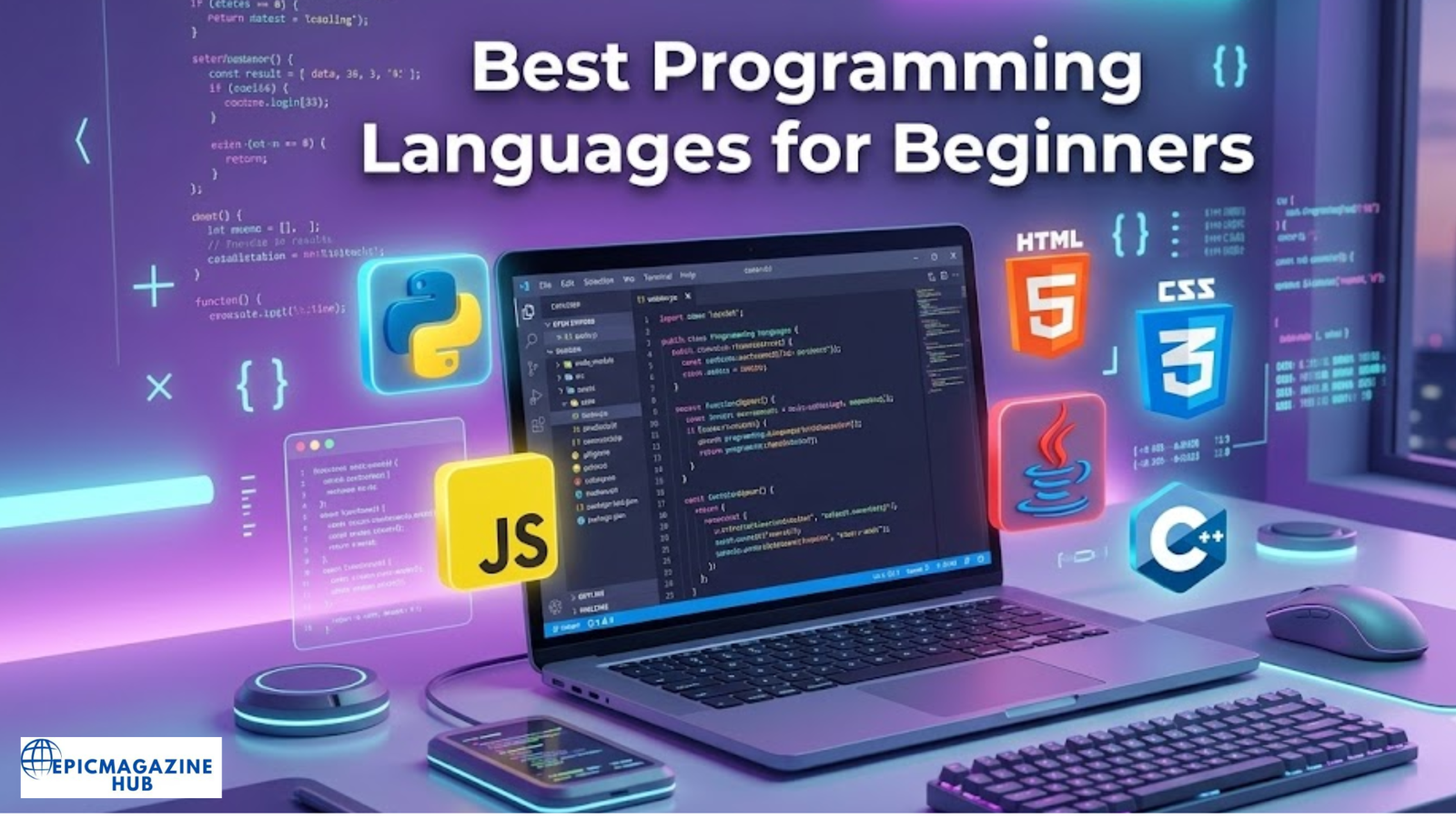
Programming has become one of the most valuable skills in today’s digital world. Almost every industry now depends on technology, from business and healthcare to education, finance, and entertainment. As companies continue to build websites, mobile applications, artificial intelligence tools, and software solutions, the demand for people with coding skills continues to grow. Learning programming can help beginners understand how technology works, solve real-world problems, and create useful digital products.
However, many beginners feel confused when they decide to start their coding journey. With dozens of programming languages available, choosing the first language can feel challenging. New learners often wonder whether they should start with Python, JavaScript, Java, C++, or another option. The truth is that there is no single programming language that is perfect for everyone. The best choice depends on a person’s goals, interests, learning style, and future career plans.
Finding the best programming language for beginners is about selecting a language that is easy to understand, has strong community support, and provides opportunities to build practical projects. Some languages are better for web development, while others are more suitable for artificial intelligence, data science, mobile apps, or software development. By understanding the strengths of each language, beginners can make a better decision and start learning with confidence.
Whether someone wants to become a professional developer, improve problem-solving skills, or explore technology, starting with the right programming language can make the learning process easier and more enjoyable. The key is to choose a language that matches personal goals and practice consistently to develop strong coding skills.
What Makes a Programming Language Good for Beginners?
Choosing the right programming language is an important step for anyone starting their coding journey. A beginner-friendly language should not only be easy to learn but should also help new programmers understand basic concepts, build confidence, and create useful projects. While every programming language has its own purpose, some are better suited for beginners because they offer simpler learning processes, better resources, and strong career opportunities.
Easy-to-Understand Syntax
One of the most important factors that makes a programming language suitable for beginners is simple and readable syntax. Syntax refers to the rules and structure used to write code. When a language has clean and easy-to-understand syntax, new learners can focus more on learning programming concepts instead of struggling with complicated code rules.
For example, beginners need to understand important programming ideas such as variables, conditions, loops, and functions. A language with simple syntax allows learners to understand these concepts faster and apply them in real projects. If the code looks more like normal human language, beginners can easily follow what each line does and identify mistakes.
Beginner-friendly syntax also helps build confidence. Many new programmers feel discouraged when they face complex code errors at the beginning. A simple programming language reduces frustration and allows learners to see progress quickly. When beginners can create small programs and understand how their code works, they become more motivated to continue learning advanced concepts.
Strong Learning Resources and Community Support
Another important factor when choosing a programming language is the availability of learning resources and community support. Beginners need access to tutorials, online courses, documentation, videos, and practice platforms to improve their skills. A language with a large amount of educational content makes it easier for new learners to find answers and continue their progress.
Official documentation helps beginners understand how a language works, while online courses and tutorials provide step-by-step guidance. Websites, coding communities, and discussion forums allow learners to ask questions, share problems, and learn from experienced developers.
A strong programming community can make a big difference for beginners. When learners face errors or difficult concepts, they can find solutions from other programmers who have already faced similar challenges. Popular languages usually have large communities where beginners can receive support, making the learning experience smoother and less stressful.
Real-World Applications and Career Opportunities
A good programming language for beginners should also have practical uses in the real world. Learning a language that is widely used in industries gives beginners the chance to apply their skills to actual projects and improve their career opportunities.
For example, some programming languages are commonly used for website development, mobile applications, artificial intelligence, data science, and software development. When beginners choose a language with real-world applications, they can create useful projects for their portfolio and gain valuable experience.
Future career growth is another important factor to consider. Technology continues to expand, and companies are always looking for skilled developers. Learning a popular programming language can open doors to different job opportunities and freelance projects. Beginners should choose a language that matches their interests and long-term goals, whether they want to become a web developer, software engineer, data analyst, or app developer.
Ultimately, the best programming language for beginners is one that combines simplicity, strong learning support, and valuable career opportunities. A language that is easy to start with but also useful in professional environments can help beginners build a strong foundation for their programming journey.
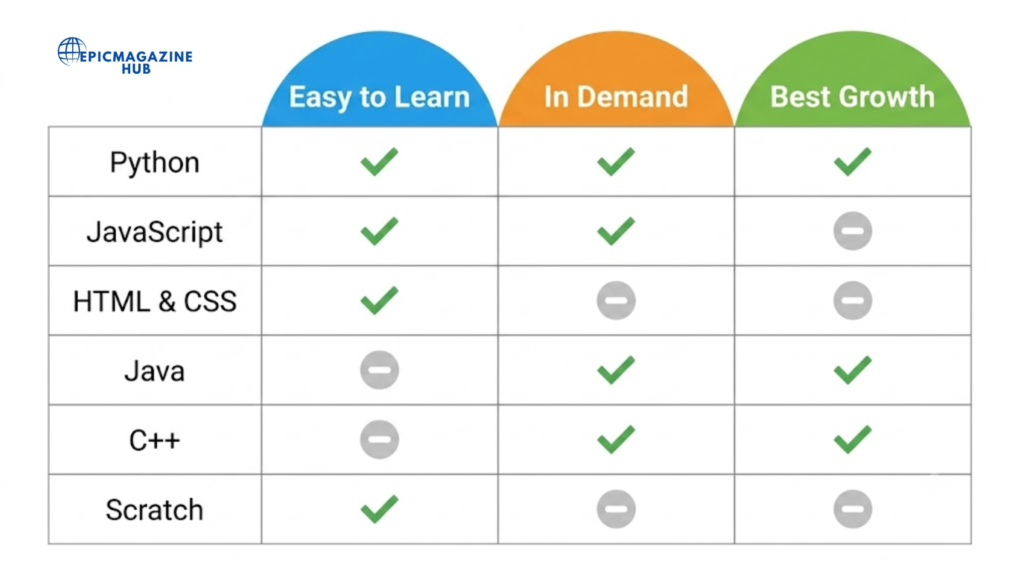
Best Programming Languages for Beginners Comparison
| Programming Language | Best For | Difficulty Level | Career Opportunities |
| Python | Artificial Intelligence, Data Science, Automation, Web Development | Easy | Very High |
| JavaScript | Web Development, Web Applications, Front-End & Full-Stack Development | Easy to Medium | Very High |
| HTML & CSS | Website Design and Web Development Basics | Very Easy | High (with JavaScript) |
| Java | Android Apps, Software Development, Backend Systems | Medium | High |
| C++ | Game Development, System Programming, Computer Science | Difficult | High |
| Scratch | Kids, Students, Complete Beginners | Very Easy | Learning Foundation |
1. Python: The Best Overall Programming Language for Beginners
Python is widely considered one of the best programming languages for beginners because it offers a simple learning experience while still being powerful enough for professional development. Many new programmers choose Python as their first language because it allows them to understand basic coding concepts without dealing with complicated syntax. Whether someone wants to explore software development, artificial intelligence, data science, or automation, Python provides a strong foundation for starting a programming career.
Why Python Is Popular Among New Programmers
One of the main reasons Python is popular among beginners is its simple and clean syntax. Unlike many older programming languages that require complex code structures, Python uses a more readable style that is closer to everyday English. This makes it easier for new learners to understand what their code is doing and focus on solving problems instead of memorizing difficult rules.
For example, beginners can quickly learn important programming concepts such as variables, loops, functions, and conditions in Python. The language removes unnecessary complexity, allowing students to write fewer lines of code compared to many other languages. This simple approach helps beginners build confidence and enjoy the learning process.
Python is also widely used in schools, universities, and online learning platforms because of its beginner-friendly nature. Many educational institutions choose Python to introduce students to programming because it allows learners to understand fundamental concepts without feeling overwhelmed. Popular coding platforms and online courses also use Python because it is suitable for complete beginners and provides opportunities to move into advanced fields later.
Another key reason Python is so popular is its large, active, and supportive community. Beginners can easily find tutorials, documentation, coding exercises, and solutions to common problems. This strong support system makes it easier for new programmers to continue learning and improve their skills.
What Can You Build With Python?
Although Python is easy for beginners, it is also a powerful language used by professional developers around the world. It can be used to create many different types of applications and solve real-world problems.
Python is commonly used for building web applications. Developers use frameworks such as Django and Flask to create websites, online platforms, and backend systems. These tools allow programmers to build secure and scalable web solutions while using Python’s simple structure.
Python is also an excellent choice for creating automation tools. Many businesses and developers use Python scripts to automate repetitive tasks, manage files, process data, and improve workflow efficiency. Beginners can create simple automation projects that help them understand how programming can save time and solve everyday problems.
Another major area where Python is popular is artificial intelligence. Python has become one of the leading languages for AI development because it provides powerful libraries and frameworks for creating intelligent systems. Beginners interested in AI can use Python to explore technologies such as chatbots, computer vision, and natural language processing.
Data analysis is another field where Python is widely used. With libraries like Pandas and NumPy, programmers can organize, analyze, and visualize large amounts of information. This makes Python a valuable skill for people interested in data science and business analytics.
Python is also heavily used in machine learning applications. Developers use Python-based tools to train computer models, make predictions, and develop intelligent software. Because of its role in modern technology, learning Python can create opportunities in some of the fastest-growing areas of the tech industry.
Advantages and Limitations of Learning Python
Python offers many advantages for beginners. The biggest benefit is its easy learning curve. New programmers can start writing useful programs quickly without spending too much time understanding complicated language rules. This makes Python a great option for students, career changers, and anyone exploring programming for the first time.
Another advantage of Python is its versatility. A person who learns Python can use the same language for web development, automation, data science, AI, and many other fields. This flexibility allows beginners to explore different career paths before choosing a specific area of development.
Python also has excellent community support and a huge collection of libraries. These resources help beginners complete projects faster and learn advanced topics more easily. Additionally, Python skills are valuable in the job market, with many companies looking for developers who understand Python-based technologies.
However, Python also has some limitations. While it is excellent for beginners and many professional tasks, it may not be the best choice for certain types of software development. For example, Python is generally slower than languages like C++ or Java when performance and speed are critical. Applications that require extremely fast processing, such as some game engines or system-level software, may use other programming languages instead.
Python is also less commonly used for mobile app development compared to languages like Swift for iOS or Kotlin for Android. Although developers can create mobile applications using Python frameworks, it is not the primary choice for most mobile development projects.
Despite these limitations, Python remains one of the strongest choices for beginners. Its simple syntax, wide range of applications, and strong career potential make it an ideal first programming language for anyone starting their coding journey. Learning Python provides beginners with a solid foundation that can help them move into more advanced areas of technology.
2. JavaScript: The Best Language for Learning Web Development
JavaScript is one of the most popular programming languages in the world and is considered one of the best programming languages for beginners who want to learn web development. It is the main technology that makes modern websites interactive and dynamic. While HTML creates the structure of a webpage and CSS controls its design, JavaScript adds functionality and allows websites to respond to user actions.
Many beginners choose JavaScript because it provides immediate results. After learning basic concepts, new programmers can create interactive features that work directly in a web browser. This ability to see their code come to life helps beginners stay motivated and understand how websites function.
Why Beginners Should Consider JavaScript
JavaScript plays an important role in modern websites because it allows developers to create engaging and interactive user experiences. Without JavaScript, many websites would only display static information. Features such as image sliders, online forms, animations, menus, search suggestions, and real-time updates are often powered by JavaScript.
One of the biggest advantages of learning JavaScript is that it can be used for both front-end and backend development. Front-end development focuses on the part of a website that users see and interact with. JavaScript allows developers to create responsive interfaces, improve user experiences, and build modern web applications.
JavaScript is also used for backend development with technologies like Node.js. This means developers can use JavaScript to create server-side applications, manage databases, and build complete web solutions using a single programming language. For beginners, this makes JavaScript a valuable skill because they can continue using the same language as they progress from basic projects to professional development.
Another reason JavaScript is a good choice for beginners is its large community and extensive learning resources. There are thousands of tutorials, courses, documentation pages, and developer communities available online. This makes it easier for new programmers to find help and improve their skills.
What Can You Create With JavaScript?
JavaScript allows beginners to build many different types of projects while learning programming concepts. Starting with small projects and gradually moving toward advanced applications helps new developers gain practical experience.
One of the first things beginners can create with JavaScript is interactive websites. They can add features such as buttons that respond to clicks, forms that validate user information, animations, and dynamic content updates. These small projects help beginners understand how websites communicate with users.
JavaScript is also used to develop complete web applications. Popular platforms and tools use JavaScript to create powerful online experiences, including dashboards, social media platforms, online stores, and productivity applications. Beginners who learn JavaScript can eventually build similar types of applications as they improve their skills.
Another useful area of JavaScript development is browser-based tools. Developers can create applications that run directly inside web browsers without requiring users to install additional software. Examples include calculators, text editors, productivity tools, and interactive learning platforms.
With Node.js, JavaScript can also be used for server-side applications. Developers can build APIs, manage databases, create online services, and develop complete backend systems. This makes JavaScript a flexible language that supports both beginner projects and professional software development.
JavaScript Learning Path for Beginners
Beginners should start their JavaScript journey by learning basic programming concepts. These include variables, data types, functions, conditions, loops, and basic problem-solving techniques. Understanding these fundamentals creates a strong foundation for learning more advanced topics later.
After learning the basics, beginners can move toward front-end development. They can learn how JavaScript works with HTML and CSS to create interactive websites. At this stage, practicing by building small projects such as calculators, to-do lists, and simple websites can improve coding skills.
Once beginners become comfortable with JavaScript fundamentals, they can explore popular front-end frameworks such as React, Angular, or Vue.js. These tools help developers build complex and professional web applications more efficiently.
Advanced JavaScript skills include working with APIs, databases, backend development, performance optimization, and software architecture. By following a structured learning path and consistently practicing, beginners can gradually become skilled web developers.
3. HTML and CSS: The Best Starting Point for Web Design Beginners
Before learning advanced programming languages, many beginners start with HTML and CSS because they provide the foundation of website creation. Although HTML and CSS are not traditional programming languages, they are essential web technologies that every web developer should understand.
HTML is responsible for creating the structure and content of a webpage, while CSS controls its appearance and design. Together, they form the basic building blocks of almost every website on the internet.
Understanding the Role of HTML and CSS
HTML, which stands for HyperText Markup Language, is used to organize webpage elements such as headings, paragraphs, images, links, and forms. It tells the browser how different parts of a website should be arranged.
CSS, or Cascading Style Sheets, focuses on the visual appearance of websites. It allows developers to change colors, fonts, layouts, spacing, and responsive designs. With CSS, beginners can transform a simple HTML page into a professional-looking website.
Although HTML and CSS do not involve the same programming logic as languages like Python or JavaScript, they are essential skills for anyone interested in web development. Understanding these technologies helps beginners learn how websites are structured and prepares them for more advanced programming.
Why Beginners Should Learn HTML and CSS First
One major advantage of learning HTML and CSS is their easy learning curve. Beginners can understand the basic concepts quickly and start creating webpages within a short time. Unlike complex programming languages, HTML and CSS have simple rules that are easier for new learners to follow.
Another benefit is that they provide quick visual results. When beginners write HTML and CSS code, they can immediately see changes in their webpage. This instant feedback makes learning more enjoyable and helps students understand how their code affects the final design.
HTML and CSS also provide a strong foundation for web development. Once beginners understand how websites are structured and styled, learning JavaScript and other programming technologies becomes much easier. These skills work together to create complete websites and web applications.
For anyone interested in becoming a web developer, learning HTML and CSS is an excellent first step. They help beginners build confidence, understand website fundamentals, and prepare for more advanced coding skills.
4. Java: A Great Choice for Learning Programming Fundamentals
Java is one of the most established programming languages and remains a popular choice for beginners who want to understand core programming concepts. Although Java has a more structured syntax compared to beginner-friendly languages like Python, it provides a strong foundation for learning how professional software is developed.
Many universities and computer science programs teach Java because it helps students understand important programming principles. Learning Java can improve problem-solving skills and prepare beginners for more advanced programming languages and technologies.
Why Java Is Beginner-Friendly
One of the main reasons Java is useful for beginners is that it teaches object-oriented programming concepts. Object-oriented programming, often called OOP, is a programming approach that organizes code using objects and classes. These concepts are widely used in modern software development and help developers create organized and reusable code.
Java allows beginners to learn important concepts such as classes, objects, inheritance, and encapsulation. Understanding these ideas helps new programmers develop a deeper understanding of how large software applications are created. Although these concepts may seem challenging at first, they provide valuable knowledge that can benefit developers throughout their careers.
Java also follows a structured learning approach. Its strict rules encourage beginners to write clean and organized code. While some new learners may find this structure difficult initially, it helps them develop good programming habits. By learning Java, beginners can understand how professional developers approach software design and development.
Another advantage of Java is its platform independence. Java programs can run on different operating systems through the Java Virtual Machine (JVM). This feature has made Java a reliable choice for many businesses and organizations around the world.
Career Opportunities With Java
Learning Java can open the door to many career opportunities because it is widely used in the technology industry. Many companies rely on Java for building large-scale applications, business software, and online services.
One major area where Java is used is Android development. Java was one of the primary languages used for creating Android applications for many years. Beginners who learn Java can understand the basics of mobile app development and explore opportunities in the Android ecosystem.
Java is also commonly used for enterprise software development. Large companies use Java to create secure and reliable systems for banking, healthcare, finance, and other industries. Because these applications depend on stability and high performance, Java remains a trusted technology for businesses.
Another career path for Java developers is backend development. Java frameworks such as Spring and Spring Boot allow developers to build powerful server-side applications, APIs, and web services. Beginners who continue improving their Java skills can move into professional software development roles.
5. C++: Best for Understanding Programming Basics
C++ is a powerful programming language that is widely used for learning computer science fundamentals. Although it is more challenging than languages like Python or JavaScript, it provides deep knowledge about how computers work internally.
Many computer science students learn C++ because it teaches important concepts related to programming logic, performance, and system operations. For beginners who want a strong technical foundation, C++ can be a valuable language to study.
Why Learn C++ as a Beginner?
One of the biggest benefits of learning C++ is that it helps beginners understand memory management and computer fundamentals. Unlike some higher-level languages that handle many technical processes automatically, C++ gives developers more control over how computer memory is used.
Understanding memory management helps programmers learn how software communicates with computer hardware. These concepts are especially useful for people interested in areas such as game development, operating systems, embedded systems, and high-performance applications.
C++ is also important in computer science education because it teaches strong programming fundamentals. Beginners learn how variables, functions, data structures, and algorithms work at a deeper level. This knowledge can make it easier to learn other programming languages in the future.
Many professional technologies are built using C++, including game engines, graphics software, and system-level applications. Learning C++ gives beginners an understanding of the technical side of programming and improves their problem-solving abilities.
Challenges of Learning C++
Although C++ offers many benefits, it can be more difficult for beginners compared to languages like Python or JavaScript. Its syntax is more complex, and new programmers need to understand additional concepts such as pointers, memory allocation, and manual resource management.
Beginners may spend more time fixing errors and understanding how their code works internally. This can sometimes feel overwhelming, especially for people who have never programmed before.
However, the challenges of C++ can also become advantages. Once beginners understand C++ concepts, they often find other programming languages easier to learn. It develops strong logical thinking and provides a deeper understanding of software development.
For beginners looking to achieve quick results, Python or JavaScript are often the best languages to start with. But for those interested in computer science, game development, or low-level programming, C++ can be an excellent learning choice.
6. Scratch: Best Programming Language for Kids and Complete Beginners
Scratch is a visual programming language designed to help children and complete beginners learn coding concepts easily and enjoyably. Instead of writing traditional lines of code, Scratch uses colorful blocks that users can connect to create programs.
It is especially useful for people who are completely new to programming because it removes the complexity of coding syntax. Beginners can focus on understanding programming logic without worrying about typing errors or complicated rules.
How Scratch Helps Beginners Learn Coding
Scratch introduces beginners to important programming concepts through a visual approach. Users can create animations, games, stories, and interactive projects by arranging code blocks in different combinations.
This method helps learners understand how programming works. They learn concepts such as sequences, loops, conditions, events, and variables while creating fun projects. Because the results are visible immediately, beginners can stay motivated and enjoy the learning process.
Scratch also helps develop logical thinking and problem-solving skills. When creating projects, learners need to plan steps, test their ideas, and fix problems. These skills are essential for becoming a successful programmer in the future.
Another advantage of Scratch is that it encourages creativity. Beginners can experiment with different ideas and build projects based on their interests. This makes learning programming feel more like exploration rather than a difficult technical task.
Who Should Learn Scratch?
Scratch is an excellent choice for students who are just starting to explore technology and programming. It helps young learners understand coding concepts before moving to text-based programming languages.
Young learners can use Scratch to develop creativity, logical thinking, and problem-solving abilities. Many schools use Scratch as an introduction to computer science because it makes programming easier and more engaging.
Scratch is also suitable for absolute beginners of any age who feel nervous about starting coding. It provides a simple introduction to programming concepts and helps learners build confidence before moving to languages like Python, JavaScript, or Java.
While Scratch is not typically used for professional software development, it plays an important role in helping beginners develop the mindset and skills needed to become future programmers.
Python vs JavaScript: Which Programming Language Should Beginners Choose?
When beginners decide to start learning programming, Python and JavaScript are often the two most recommended choices. Both languages are powerful, beginner-friendly, and widely used in the technology industry. However, they are designed for different purposes and offer different learning experiences. Choosing between Python and JavaScript depends on a beginner’s interests, career goals, and the type of projects they want to build.
Python is known for its simple syntax and is commonly used in fields such as artificial intelligence, data science, automation, and software development. JavaScript, on the other hand, is the leading language for web development and is used to create interactive websites and web applications. Understanding the differences between these two languages can help beginners choose the right starting point for their coding journey.
Comparing Python and JavaScript for New Learners
Ease of Learning
Both Python and JavaScript are considered beginner-friendly programming languages, but Python usually has a simpler learning curve. Its clean and readable syntax allows beginners to understand programming concepts without dealing with too many complex rules. New learners can write their first programs quickly and focus on improving their problem-solving skills.
Python is often recommended for people who have no previous programming experience because its code structure is easy to follow. Concepts such as variables, loops, and functions are simpler to understand, making the learning process smoother for beginners.
JavaScript is also a good choice for beginners, especially those interested in creating websites. However, it has some concepts that can be confusing at the beginning, such as asynchronous programming, objects, and browser-related functionality. While these topics are important for professional development, they may require extra time to understand.
For complete beginners who want the easiest introduction to programming, Python may be the better option. However, beginners who are excited about building websites and seeing visual results quickly may enjoy learning JavaScript.
Career Opportunities
Both Python and JavaScript offer excellent career opportunities because they are widely used in the technology industry. The better choice depends on the career path a beginner wants to follow.
Python offers career opportunities in fields such as artificial intelligence, machine learning, data science, automation, cybersecurity, and backend development. Many companies use Python because of its powerful libraries and ability to handle complex tasks efficiently.
JavaScript has a strong position in web development. Almost every modern website uses JavaScript in some way, and companies need developers who can create interactive and responsive web applications. JavaScript developers can work as front-end developers, backend developers, or full-stack developers.
For beginners who want a broad range of technology options, Python provides flexibility across multiple industries. For those who want to enter web development, JavaScript offers a direct path toward professional opportunities.
Project Possibilities
Python and JavaScript both allow beginners to create exciting projects, but the types of projects are different.
With Python, beginners can build automation scripts, simple applications, data analysis tools, artificial intelligence projects, and web applications. Python is especially useful for people interested in working with information, technology research, and intelligent systems.
JavaScript allows beginners to create projects that users can interact with directly. New developers can build websites, online calculators, browser games, interactive forms, dashboards, and complete web applications. Seeing immediate results in a browser can make the learning experience more enjoyable.
For beginners who want to experiment with different types of technology, Python offers more variety. For beginners who want to create websites and online tools, JavaScript provides more practical opportunities.
Long-Term Usefulness
Both Python and JavaScript have strong long-term value. They continue to be among the most popular programming languages and are expected to remain important in the future.
Python’s growth is connected to areas like artificial intelligence, automation, and data science. As businesses continue adopting AI technologies and data-driven solutions, Python skills are becoming increasingly valuable.
JavaScript remains essential because the internet continues to grow. Websites, web applications, and online services depend heavily on JavaScript, making it a reliable skill for future developers.
The best long-term choice depends on personal goals. Beginners interested in emerging technologies may benefit from learning Python, while those interested in web development may find JavaScript more useful.
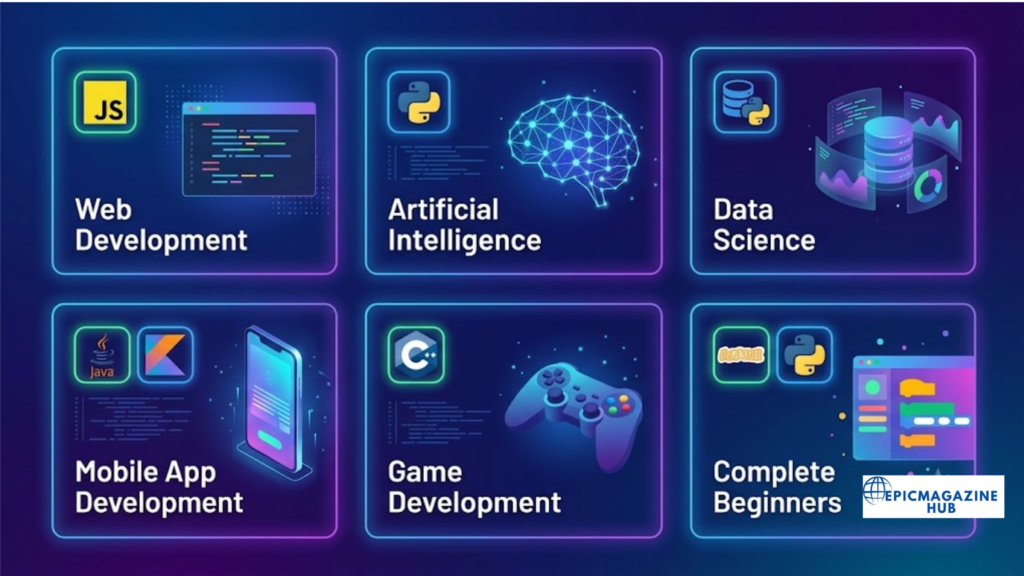
Which Language Is Better for Different Career Goals?
| Career Goal | Best Programming Language | Reason |
| Web Development | JavaScript | Websites and web applications banane ke liye best |
| Artificial Intelligence | Python | AI and machine learning libraries ki wajah se popular |
| Data Science | Python | Data analysis aur visualization ke liye useful |
| Mobile App Development | Java / Kotlin / Swift | Android aur iOS apps ke liye use hota hai |
| Game Development | C++ / C# | High performance games banane ke liye suitable |
| Complete Beginners | Python / Scratch | Easy learning aur basic concepts samajhne ke liye |
Web Development
For web development, JavaScript is usually the better choice. It is the main programming language used for creating interactive websites and web applications. Beginners can combine JavaScript with HTML and CSS to build complete front-end experiences.
JavaScript also supports backend development through technologies like Node.js, allowing developers to create full-stack applications. This means beginners can eventually use one language to handle both the user interface and server-side programming.
Although Python can also be used for web development through frameworks like Django and Flask, JavaScript remains the dominant choice for modern web development.
Artificial Intelligence
For artificial intelligence, Python is the clear choice for most beginners. It has a large ecosystem of AI and machine learning libraries that make it easier to build intelligent applications.
Python is widely used for tasks such as building machine learning models, natural language processing, computer vision, and data analysis. Many researchers and technology companies use Python when developing AI solutions.
Beginners who are interested in AI, automation, or future technologies should consider starting with Python.
Data Science
Python is also the preferred language for data science. It provides powerful tools for collecting, analyzing, and visualizing data. Libraries such as Pandas, NumPy, and Matplotlib make it easier for beginners to work with large datasets.
Data scientists use Python to discover patterns, create reports, and develop predictive models. Because of its simplicity and strong community support, Python is one of the best choices for beginners interested in working with data.
JavaScript can handle some data-related tasks, but Python remains the industry standard for most data science careers.
Software Development
Both Python and JavaScript can be useful for software development, but the better choice depends on the type of software a person wants to create.
Python is commonly used for backend systems, automation software, scientific applications, and AI-based programs. Its simplicity makes it a strong option for developers who want to build useful applications quickly.
JavaScript is widely used for web-based software, online platforms, and full-stack applications. Its ability to work on both the front end and back end makes it valuable for modern software development.
For beginners who are unsure about their career direction, Python is often a great first choice because it provides a strong foundation and allows exploration of multiple fields. For those specifically interested in websites and web applications, JavaScript is an excellent starting point.
Ultimately, both Python and JavaScript are excellent programming languages for beginners. The right choice depends on individual goals, interests, and the type of technology someone wants to create. The most important step is to start learning, practice regularly, and build real projects.
How Long Does It Take to Learn a Programming Language?
One of the most common questions beginners ask is how long it takes to learn a programming language. The answer depends on several factors, including the language being learned, the amount of time spent practicing, and the learner’s goals. Some beginners can understand basic concepts within a few weeks, while becoming comfortable enough to build real-world projects may take several months.
Learning programming is not just about memorizing commands or writing code. It is about developing problem-solving skills, understanding how technology works, and learning how to create solutions. With consistent practice and the right learning approach, beginners can make steady progress and build valuable programming skills over time.
Factors That Affect Learning Speed
Practice Time
The amount of time a beginner spends practicing has a major impact on how quickly they learn programming. Someone who spends an hour coding each day will typically make faster progress than someone who practices only occasionally.
Programming works like any other skill. Regular practice helps beginners remember concepts, improve logical thinking, and become more comfortable writing code. Even short daily practice sessions can produce better results than long study sessions followed by long breaks.
However, practice quality is also important. Simply reading tutorials without writing code will not provide enough experience. Beginners should spend time creating programs, solving coding problems, and experimenting with different ideas.
Learning Method
The method used to learn programming can greatly affect progress. Beginners who follow a structured learning path usually improve faster because they learn concepts in the correct order.
A good learning approach includes understanding basic concepts first, such as variables, data types, conditions, loops, and functions. After building a strong foundation, beginners can move toward more advanced topics and real-world projects.
Using different learning resources can also improve understanding. Online courses, documentation, coding exercises, and developer communities all provide different ways to learn. Finding a learning method that matches personal preferences can make the process easier and more enjoyable.
Previous Technical Knowledge
A beginner’s previous experience with technology can also influence learning speed. People who are already comfortable using computers, software, or digital tools may understand programming concepts more quickly.
However, having no technical background does not mean someone cannot learn programming. Many successful developers started with no previous coding experience. The most important factors are curiosity, patience, and willingness to practice.
Programming languages like Python and JavaScript are designed to be accessible to beginners, making it possible for anyone to start learning regardless of their background.
Project Experience
Building projects is one of the fastest ways to improve programming skills. Reading about programming concepts is helpful, but applying those concepts in real projects creates a deeper understanding.
Beginners who build small applications learn how different parts of programming work together. They also develop problem-solving skills by facing challenges and finding solutions.
Project experience also helps learners create a portfolio that can be useful for future career opportunities. Whether someone wants to become a professional developer or improve technical skills, practical experience is an important part of the learning process.
How Beginners Can Learn Faster
Practice Regularly
Consistency is one of the most important factors for learning programming faster. Beginners should create a regular study schedule and practice coding frequently.
Writing code every day, even for a short time, helps develop programming habits and improves memory. Regular practice also makes it easier to understand complex topics because each new concept builds on previous knowledge.
Instead of trying to learn everything at once, beginners should focus on making gradual progress. Learning one concept, practicing it, and then moving to the next topic creates a stronger understanding.
Build Small Projects
Creating small projects is one of the best ways for beginners to improve their coding skills. Projects allow learners to apply what they have studied and understand how programming works in real situations.
Beginners can start with simple projects such as calculators, personal websites, basic games, to-do applications, or automation scripts. These projects may seem simple, but they help develop important skills and confidence.
As programming knowledge improves, beginners can create more advanced projects. Building projects also teaches valuable skills such as debugging, planning, and improving existing code.
Learn Programming Concepts Instead of Memorizing Code
Many beginners make the mistake of trying to memorize every piece of code they see. While remembering common patterns can be helpful, understanding programming concepts is much more important.
Programming is about knowing how and why something works. Beginners should focus on understanding ideas such as logic, problem-solving, data structures, and how different parts of a program interact.
When learners understand concepts, they can write code more independently and adapt their knowledge to different situations. This approach also makes it easier to learn additional programming languages in the future.
Ultimately, the time required to learn a programming language depends on personal effort, learning methods, and practice habits. A beginner can understand the basics within a few months, but becoming skilled requires continuous learning and hands-on experience. The key is to stay consistent, build projects, and focus on understanding rather than simply memorizing code.
Common Mistakes Beginners Make While Learning Programming
Learning programming can be an exciting journey, but many beginners make mistakes that slow down their progress. These mistakes are usually caused by trying to learn too much too quickly or focusing on the wrong learning methods. Understanding these common challenges can help new programmers avoid frustration and build their skills more effectively.
Programming requires patience, consistent practice, and a strong understanding of basic concepts. Instead of rushing through multiple topics, beginners should focus on building a solid foundation and improving step by step.
Learning Too Many Languages at Once
One of the most common mistakes beginners make is trying to learn multiple programming languages at the same time. Many new learners start with Python, JavaScript, Java, C++, and other languages together because they believe learning more languages will make them better programmers faster.
However, this approach often creates confusion. Every programming language has its own syntax, rules, and structure. When beginners switch between different languages too frequently, they may struggle to understand the core concepts and spend more time memorizing differences instead of developing real programming skills.
Focusing on one programming language first is a much better approach. By spending enough time with a single language, beginners can understand important concepts such as variables, functions, loops, and problem-solving techniques. Once these fundamentals are clear, learning another language becomes much easier because many programming concepts are similar across different languages.
For example, a beginner who learns Python properly can later move to JavaScript, Java, or C++ with a better understanding of programming logic. The goal should not be to learn many languages quickly but to become confident with one language and use it to create real projects.
Only Watching Tutorials Without Practice
Another common mistake beginners make is spending too much time watching tutorials without actually writing code. Tutorials are useful for learning new concepts, but watching someone else program is not the same as creating programs independently.
Programming is a practical skill that improves through hands-on experience. Beginners need to write code, make mistakes, debug errors, and find solutions on their own. These experiences help develop problem-solving abilities and build confidence.
After learning a new concept from a tutorial, beginners should immediately practice it by creating small programs. For example, after learning loops, they can create a simple calculator, a number guessing game, or a basic automation script. This type of practice helps turn theoretical knowledge into real programming ability.
Making mistakes while coding is a normal part of learning. Errors provide valuable lessons and help beginners understand how programming works. Instead of avoiding mistakes, learners should use them as opportunities to improve their skills.
Ignoring Programming Fundamentals
Some beginners focus too much on learning advanced tools, frameworks, or technologies without understanding basic programming concepts. This can create problems later because strong fundamentals are the foundation of successful programming.
Important concepts such as variables, loops, functions, and logic are used in almost every programming language. Understanding these basics helps beginners write better code and solve problems more effectively.
Variables help programs store and manage information, while loops allow developers to repeat tasks efficiently. Functions help organize code into reusable sections, making programs easier to manage. Programming logic teaches beginners how to think step by step and create solutions for different problems.
Without a strong understanding of fundamentals, beginners may struggle when working on larger projects. They might know how to use certain tools but not understand why their code works or how to fix problems.
Building a strong foundation may seem slower at first, but it saves time in the long run. Beginners who understand core programming concepts can learn new technologies faster and become more confident developers.
Avoiding these common mistakes can make the learning process smoother and more effective. By focusing on one language, practicing regularly, and mastering programming fundamentals, beginners can build the skills needed to succeed in the technology field.
How to Choose the Right Programming Language as a Beginner
Choosing the right programming language is one of the most important decisions for anyone beginning their coding journey. With many languages available, beginners often feel confused about where to begin. The best choice depends on personal interests, career goals, and the type of projects someone wants to create.
Instead of choosing a language simply because it is popular, beginners should consider what they want to achieve with programming. Different languages are designed for different purposes, so understanding your goals can help you select the most suitable option.
Choose Based on Your Goals
Web Development
If your goal is to create websites and web applications, JavaScript is one of the best choices for beginners. It is the main programming language used to make websites interactive and dynamic. When combined with HTML and CSS, JavaScript allows developers to build complete web experiences.
Beginners interested in web development can start by learning HTML and CSS to understand website structure and design, then move to JavaScript to add functionality. As skills improve, they can explore frameworks like React, Vue.js, or Angular to create more advanced applications.
Python can also be used for web development through frameworks such as Django and Flask. However, JavaScript remains one of the most important languages for modern web development because it works on both the front end and back end.
Mobile Apps
Beginners who want to create mobile applications should consider languages based on the type of apps they want to build. Java and Kotlin are commonly used for Android development, while Swift is used for iOS applications.
Java is a good option for beginners who want to understand Android app development because it teaches strong programming fundamentals and has been widely used in mobile development. Kotlin is also becoming popular because it provides a more modern approach to Android programming.
For beginners who want to create applications for multiple platforms, technologies like React Native allow developers to build mobile apps using JavaScript. Choosing the right language depends on whether the goal is Android, iOS, or cross-platform development.
AI and Data Science
For beginners interested in artificial intelligence, machine learning, or data analysis, Python is usually the best choice. Python has become the leading language in these fields because of its simple syntax and powerful libraries.
With Python, beginners can explore areas such as data visualization, machine learning models, automation, and artificial intelligence applications. Libraries like NumPy, Pandas, and TensorFlow make it easier to work with data and build intelligent systems.
The growing demand for AI and data-related skills has also increased the value of Python in the job market. Beginners who enjoy working with technology, mathematics, and problem-solving may find Python a great starting point.
Game Development
Game development requires programming skills along with creativity and technical knowledge. Beginners interested in creating games can explore languages such as C++, C#, or JavaScript.
C++ is widely used in professional game development because it provides high performance and control over computer resources. Many popular game engines use C++ because of its speed and efficiency.
C# is another popular choice for beginners because it works well with game engines like Unity. It offers a more beginner-friendly experience compared to C++ while still being powerful enough for creating different types of games.
Beginners who want to create simple browser-based games can also use JavaScript. The best choice depends on the type of games they want to develop and the platform they want to target.
Start With One Language and Build Projects
One of the most effective ways for beginners to improve programming skills is to focus on one language and start building projects. Trying to learn many languages at the same time can create confusion and prevent learners from developing a strong foundation.
Choosing one language allows beginners to understand programming concepts more deeply. Instead of constantly learning new syntax, they can focus on improving problem-solving skills and applying their knowledge in practical situations.
Hands-on practice is essential because programming skills improve through real-world experience and consistent coding. Building projects helps beginners understand how different concepts work together and teaches important skills such as debugging, planning, and improving code.
Starting with small projects is a great way to gain confidence. Beginners can create simple applications, websites, games, or automation tools before moving toward larger projects. Each completed project improves understanding and provides valuable experience.
Consistency is also important when learning programming. Practicing regularly, even for a short time each day, helps maintain progress and builds strong coding habits. Learning programming is a long-term process, and steady improvement is more valuable than trying to learn everything quickly.
The right programming language is the one that matches your goals and keeps you motivated to continue learning. By choosing a suitable language, practicing consistently, and building real projects, beginners can develop the skills needed for a successful programming journey.
Conclusion
Choosing the best programming language for beginners depends on individual goals, interests, and career plans. There is no single language that is perfect for everyone. Python is an excellent choice for beginners who want an easy introduction to programming and are interested in areas like artificial intelligence, data science, and automation. JavaScript is ideal for those who want to learn web development and create interactive websites.
Other languages, such as Java, C++, and Scratch, also provide valuable learning opportunities for different types of beginners. Java helps learners understand programming fundamentals and object-oriented concepts, C++ builds strong computer science knowledge, and Scratch provides an easy introduction for children and complete beginners.
The most important step is to start with one language, practice consistently, and build real projects. Learning programming is a journey that requires patience and continuous improvement. Instead of focusing on learning many languages quickly, beginners should focus on understanding concepts and developing problem-solving skills.
With the right approach and dedication, anyone can learn programming and use their skills to create useful applications, explore exciting career opportunities, and succeed in the growing technology industry.
Frequently Asked Questions
What is the easiest programming language for beginners?
Python is one of the easiest programming languages for beginners because it has simple syntax and is easy to understand. It helps new learners focus on programming concepts instead of complicated code rules.
Should beginners learn Python or JavaScript first?
It depends on your goals. Python is better for AI, data science, and general programming, while JavaScript is ideal for web development and creating interactive websites.
How long does it take to learn programming?
Most beginners can learn basic programming concepts within a few months with regular practice. Becoming skilled requires continuous learning, project building, and hands-on experience.
Can I get a job after learning one programming language?
Yes, learning one programming language can help you start a career if you build practical skills and projects. Employers value problem-solving abilities and real-world experience.
Is coding difficult for beginners?
Coding can be challenging at first, but anyone can learn it with patience and consistent practice. Starting with beginner-friendly languages and building small projects makes learning easier.
About the Author